


What collagen does in your skin
Collagen is the main structural protein in skin. It forms a mesh of fibres in the deeper layer of the skin, the dermis, giving it strength and firmness. Alongside elastin, which gives skin its spring, collagen is what holds the face and neck in shape.
From early adulthood, the body makes less collagen each year, and the collagen it has breaks down faster. Sun exposure, smoking, large weight changes and, for many women, the menopause all speed this up. The result is thinner, looser skin that no longer sits snugly over the jaw and neck.
The 2 types that matter here
There are many types of collagen in the body, but 2 are most relevant to skin and healing.
| Type | What it is like | Where it fits |
|---|---|---|
| Type I | Strong, thick, well organised fibres | The main structural collagen of healthy adult skin |
| Type III | Finer, weaker, more flexible fibres | Laid down early in healing, later largely replaced |
Type I collagen makes up most of the collagen in healthy adult skin. As skin ages, the balance shifts, and the overall amount falls. Encouraging the body to rebuild a stronger Type I network is the aim of many skin tightening treatments, which use heat, injury or both to start the process.
When tissue heals, the body usually lays down Type III collagen first as a quick scaffold. Over the following weeks and months, much of that is remodelled into stronger Type I collagen. This normal healing pattern is the process Endolift sets out to use.
How Endolift starts the process
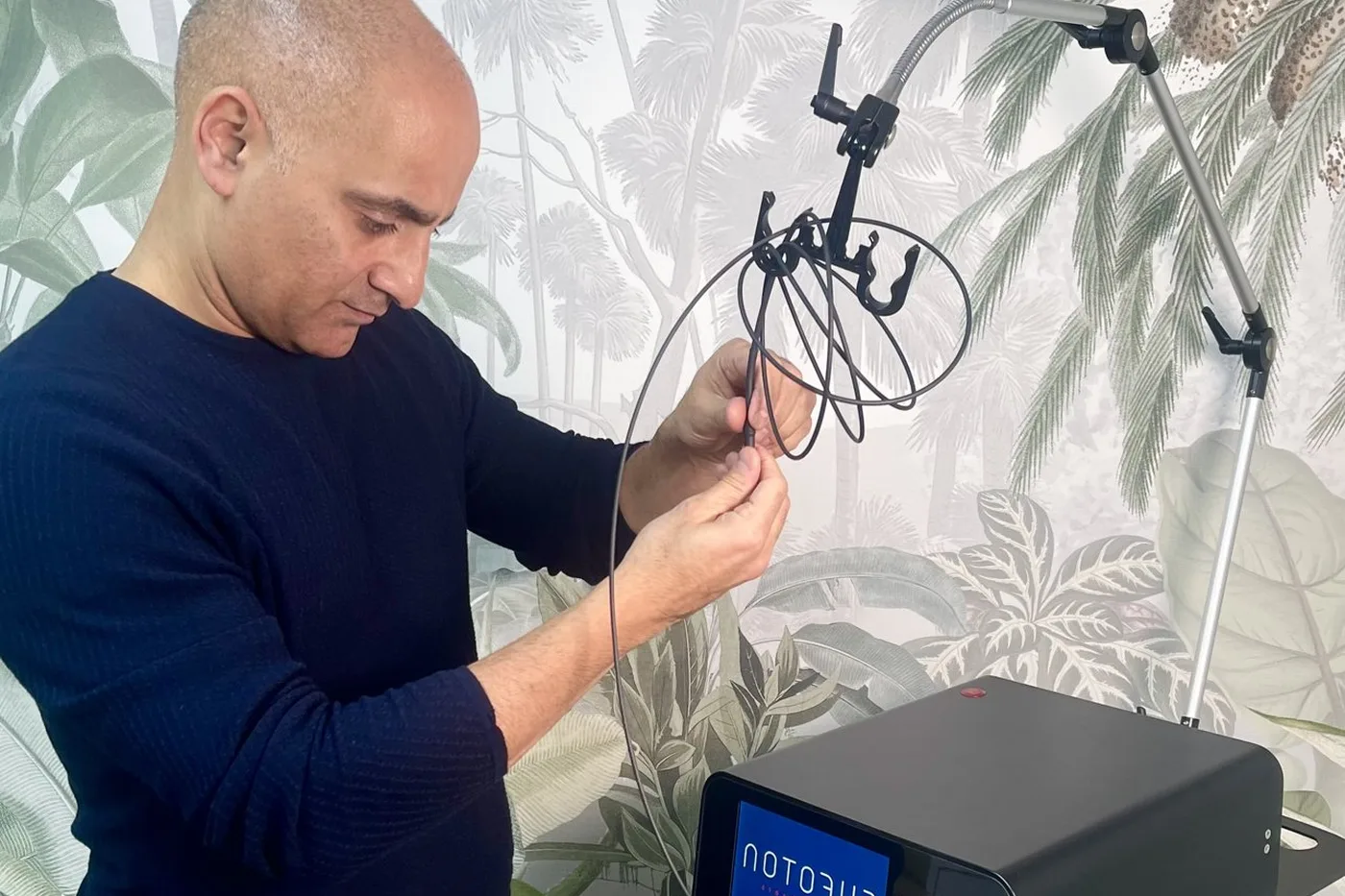
Endolift delivers 1470 nm laser energy through a fibre 200 to 600 microns wide, placed beneath the skin through a tiny entry point under local anaesthetic. This wavelength is strongly absorbed by water and fat. The controlled heat has 3 effects.
- It contracts the fibrous septa, the connective tissue bands under the skin, which gives some immediate tightening.
- It can liquefy small fat deposits.
- It creates a controlled injury that the body responds to by remodelling collagen.
The third effect is what makes Endolift a gradual treatment rather than an instant fix. For a closer look at the laser itself, see what a 1470 nm laser is and why it matters.
What happens month by month
Every person heals at their own pace, but the broad pattern is consistent.
- First 2 weeks: the body clears damaged tissue and begins laying down new collagen. Swelling, bruising and some firmness are normal and can mask the early change.
- Weeks 2 to 8: new collagen continues to form, much of it Type III at first. As swelling settles, the early tightening becomes easier to see.
- Months 2 to 6: remodelling continues, with Type III gradually replaced by stronger Type I. Skin often looks firmer and smoother over this time.
- After 6 months: the result has largely developed. From here, normal ageing continues, but from an improved starting point.
This is why a fair review needs time. A photo at 8 weeks shows early change, and photos at 3 and 6 months usually tell you more. Our article on results at 8 weeks looks at what that early stage shows.
What affects how well collagen responds
The body's ability to make new collagen differs between people, which is a large part of why results vary.
- Age: younger skin generally produces collagen more readily.
- Skin quality: heavily sun damaged or very thin skin may respond more modestly.
- Smoking: reduces blood supply to the skin and impairs collagen formation.
- Sun exposure: ultraviolet light breaks collagen down.
- Weight stability: large weight changes stretch or loosen the skin again.
- General health: some conditions and medicines affect healing, so tell your doctor about them.
Endolift results can last up to 2 years. The new collagen is real tissue, but it still ages like the rest of your skin. The article on how long Endolift lasts explains this further.
How to protect your new collagen
There is no cream that replaces what the body does after treatment, but you can avoid undoing it. Daily broad spectrum sunscreen is the most useful step. Not smoking, keeping your weight steady and using a sensible routine, such as a retinoid at night if your skin tolerates it, all help. Our guide to skincare after Endolift gives practical detail, including when to restart active ingredients.
It also helps to give the area time. Avoid firm massage, facial devices and other heat based treatments on the same area until your doctor says it is fine, so the tissue is not disturbed while it is still remodelling. Keep your review appointments, because comparing photos at set points is the most reliable way to see how the collagen response is developing.
It is also important to be realistic. Collagen remodelling improves mild to moderate laxity. It cannot turn heavy, hanging skin into tight skin, and it does not restore lost volume. For those concerns, surgery or other treatments are usually more suitable.
Dr Seth's view "I explain collagen to every patient because it sets the right expectation. You will see some tightening early, but the real change is quieter and comes over months as the body rebuilds. If someone looks in the mirror at 2 weeks and feels disappointed, I remind them the collagen has barely started. Patience is part of the treatment."
Next step
If you would like to know whether your skin is likely to respond well to Endolift, send 3 photos (front, left and right, in natural light) for Dr Seth's free assessment. Send your photos.
Questions people also ask
How long does collagen take to form after Endolift?
New collagen starts forming within the first couple of weeks, but the process of replacing weaker Type III collagen with stronger Type I continues for months. Most of the change has developed by around 6 months after treatment.
Does the new collagen last forever?
The new collagen is real tissue, but it continues to age like the rest of your skin. That is why results can last up to 2 years, depending on age, skin, sun exposure, smoking and weight stability.
Can supplements improve my collagen response?
There is limited evidence that collagen supplements meaningfully change results after Endolift. A balanced diet, not smoking, stable weight and daily sun protection are better supported ways to look after your skin while it remodels.
Why do my results look better at 6 months than at 6 weeks?
Early tightening comes mainly from contraction of the connective tissue under the skin. Collagen remodelling then adds gradual firmness over the following months, so the skin often looks better at 3 and 6 months than in the early weeks.
This article is general information, not personal medical advice. Results vary between individuals and are not guaranteed. Endolift® and LASEmaR® are registered trademarks of Eufoton® S.r.l.