


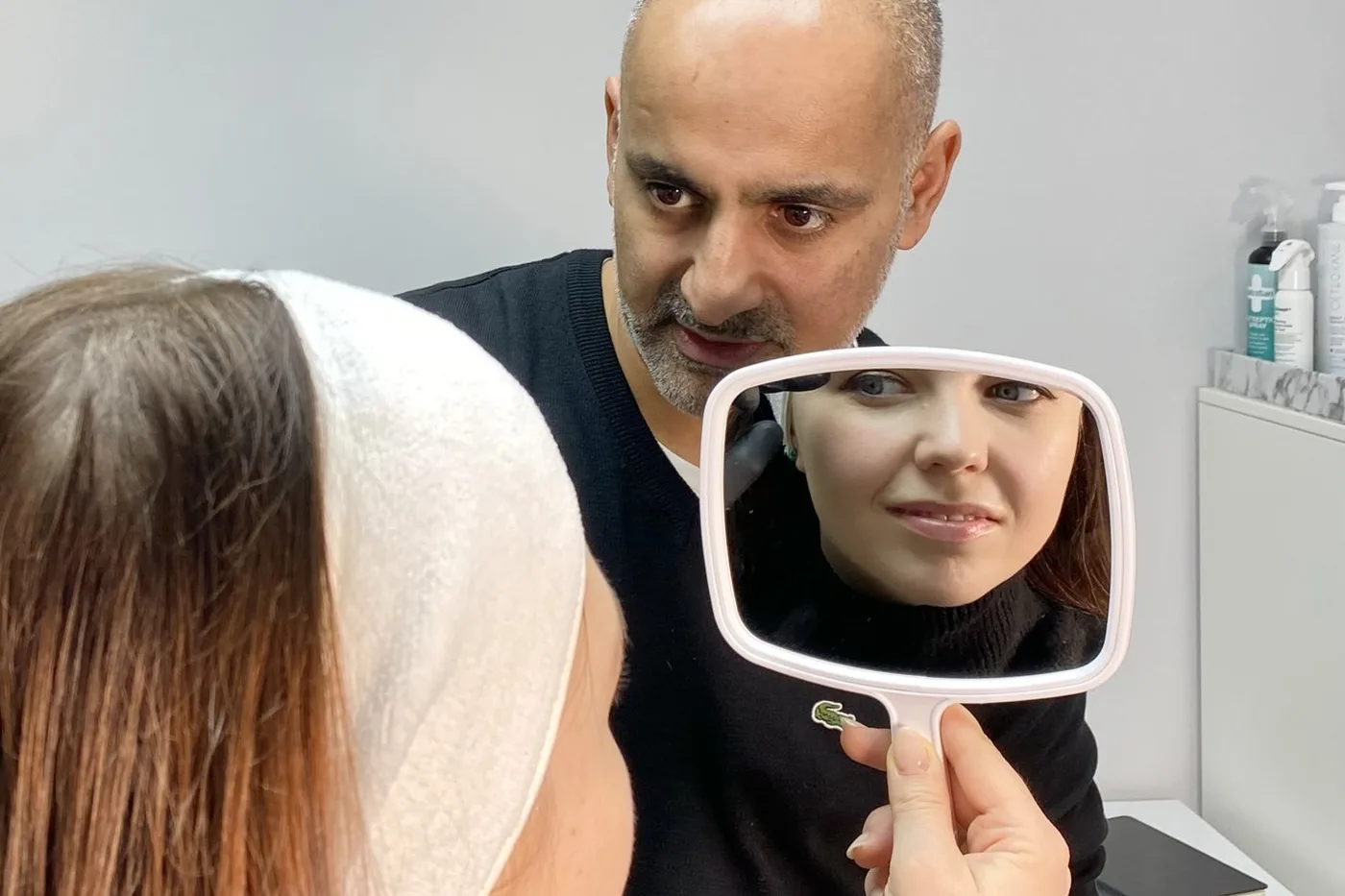
Whether Endolift hurts is among the most common questions people ask, and it deserves an honest answer. It is not a painful treatment for most people, but it is not free of discomfort either. Anyone describing it as completely comfortable is not giving you the full picture. This article walks through each stage, from the first injection to the following week, so you know what to expect.
During Endolift a very fine fibre, 200 to 600 microns wide, is passed beneath the skin through a tiny entry point. The 1470 nm laser then heats water and fat in the tissue to tighten it and start collagen remodelling. Without anaesthetic this would be uncomfortable, so the area is numbed first with local anaesthetic. You stay awake throughout, and there is no general anaesthetic. Knowing how the treatment works makes it easier to understand the sensations you will notice at each stage.
What you feel during treatment
The anaesthetic
For most people this is the most uncomfortable part. Local anaesthetic is injected into the area, which causes a stinging or burning sensation for a few seconds at each spot until it takes effect. A careful practitioner works slowly and lets the anaesthetic spread before moving on.
The laser
Once the area is numb, most people describe what they feel as pressure, pushing or movement beneath the skin rather than pain. Some notice warmth. Occasionally a small spot is less numb than the rest and you may feel a sharper sensation. If that happens, say so: more anaesthetic can be given. The treatment takes about 60 to 90 minutes in total.
Sounds and other sensations
You may hear the laser and feel the practitioner's hands moving the skin. Some people find the idea of something moving under the skin more unsettling than the actual sensation. It helps to know in advance that this is normal. If you would find it easier, ask the practitioner to describe each step before it happens, and to pause if you need a moment.
How it feels afterwards
As the anaesthetic wears off later on the day of treatment, the area usually becomes sore. The table below describes the typical pattern, though everyone is different.
| When | What most people feel |
|---|---|
| Treatment day evening | Soreness and tightness as the anaesthetic wears off |
| Days 1 to 3 | Tenderness to touch, swelling, a bruised feeling; usually the most uncomfortable stretch |
| Days 4 to 7 | Easing tenderness; firm areas can feel odd but are rarely painful |
| Weeks 1 to 2 and beyond | Numbness fading, sometimes with tingling or itching as feeling returns |
Most people manage with simple pain relief as advised by their clinic, and many return to work the next day or within 48 hours. For the neck and body, the compression garment worn for 3 to 4 days also helps comfort. For a fuller picture of the week after, see our recovery diary.
What affects how much you feel
Discomfort varies a great deal from person to person. These factors tend to make a difference:
- The area treated. The neck and under the chin are often more tender afterwards than the cheeks. Body areas such as the stomach can feel sore for longer.
- Whether fat was treated. Areas where fat was liquefied often feel firmer and more tender.
- Your own pain threshold. Some people barely notice the treatment, while others find it more uncomfortable.
- Anxiety. Feeling tense often makes discomfort seem worse. Knowing what to expect helps.
- Technique. Patient, thorough use of local anaesthetic makes a real difference to comfort.
Simple ways to make it more comfortable
A few practical steps can make the experience easier for most people.
- Tell the clinic in advance if you are anxious about needles or pain, so they can take things more slowly.
- Eat normally beforehand so you do not feel faint.
- Ask the practitioner to tell you what is about to happen at each stage.
- Speak up straight away if any spot feels sharp, so more anaesthetic can be given.
- Have pain relief ready at home, as advised by your clinic, before the anaesthetic wears off.
- For facial treatment, sleep with your head raised to reduce swelling and tightness.
When discomfort is not normal
Ordinary soreness gets better day by day. Pain that is increasing after the first 2 or 3 days, or pain with spreading redness, heat, blistering or discharge, should be reported to your clinic promptly, as these can be signs of infection or a burn. Our guide to Endolift side effects explains the difference.
Dr Seth's view "Most patients tell me the anaesthetic injections were the worst part, and that the laser itself felt like pressure. I would never describe it as completely comfortable, because that would not be honest. But with enough time spent on the anaesthetic, it is very manageable for nearly everyone."
How Endolift compares with other treatments for comfort
Endolift avoids the incisions and general anaesthetic of a surgical facelift, which is why many people find recovery easier. Compared with treatments done through the skin surface, such as some energy devices, the sensations are different because the work happens beneath the skin under local anaesthetic. If you are weighing up alternatives, our comparisons with HIFU and Morpheus8 may help.
Next step
If you would like to talk through what treatment would feel like for you, send 3 photos (front, left and right, in natural light) for Dr Seth's free assessment, followed by a free video consultation if Endolift looks suitable. Send your photos for assessment.
Questions people also ask
Is Endolift done under general anaesthetic?
No. Endolift is done under local anaesthetic, so you stay awake and can go home the same day. The anaesthetic is injected into the area first, which stings briefly, and once it has taken effect most people feel pressure and warmth rather than pain during the laser.
Which part of Endolift hurts most?
Most patients say the local anaesthetic injections are the most uncomfortable part, with a brief stinging at each spot. Afterwards, the first 2 or 3 days are usually the most tender, with soreness and swelling that feels similar to a bruise. This then eases day by day.
Can I take painkillers after Endolift?
Most people manage with simple pain relief, but check with your clinic which medicines to use. Some painkillers and supplements can increase bruising, so it is worth asking before you take anything. Tell the clinic if pain is getting worse rather than better.
This article is general information, not personal medical advice. Results vary between individuals and are not guaranteed. Endolift® and LASEmaR® are registered trademarks of Eufoton® S.r.l.